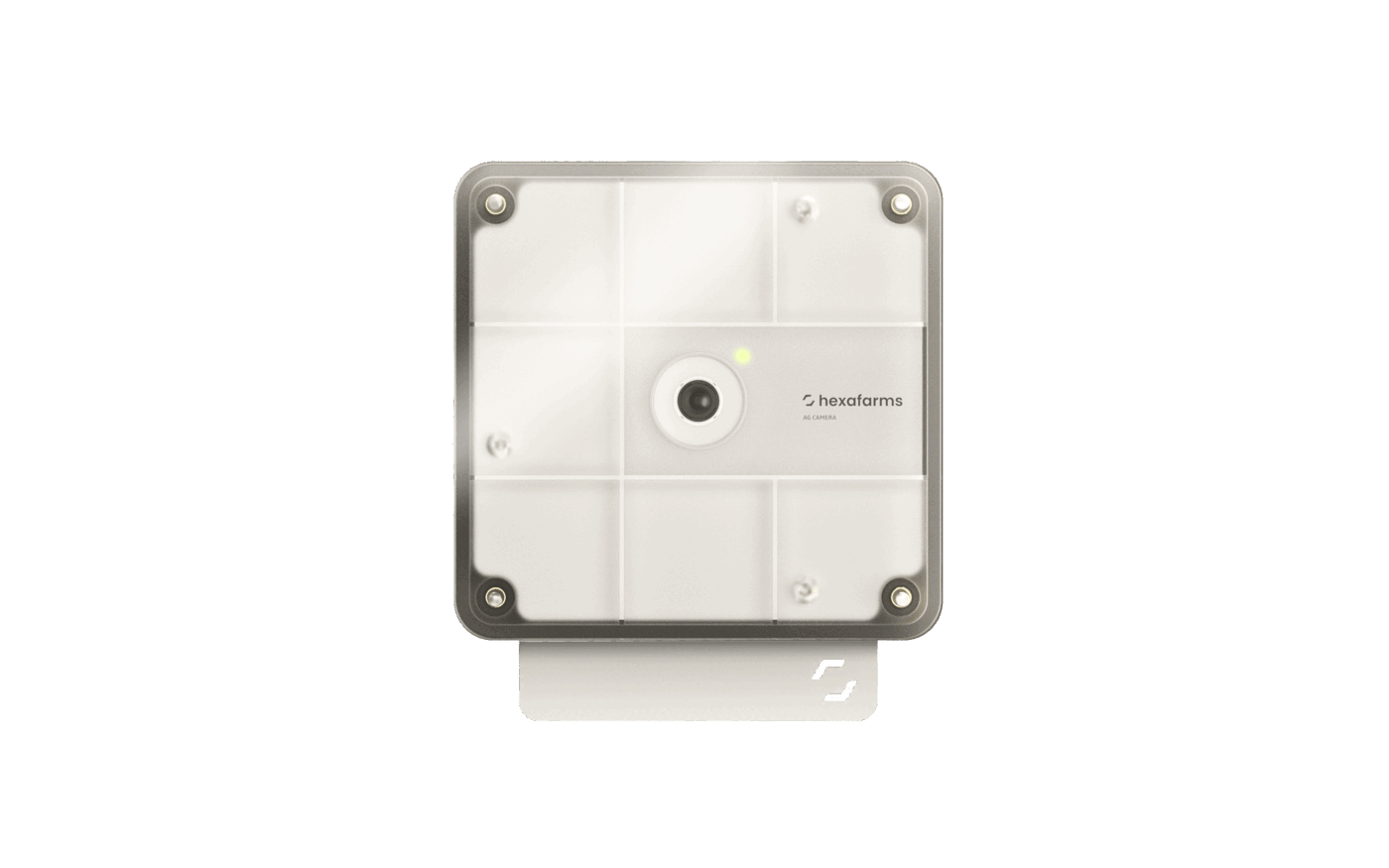
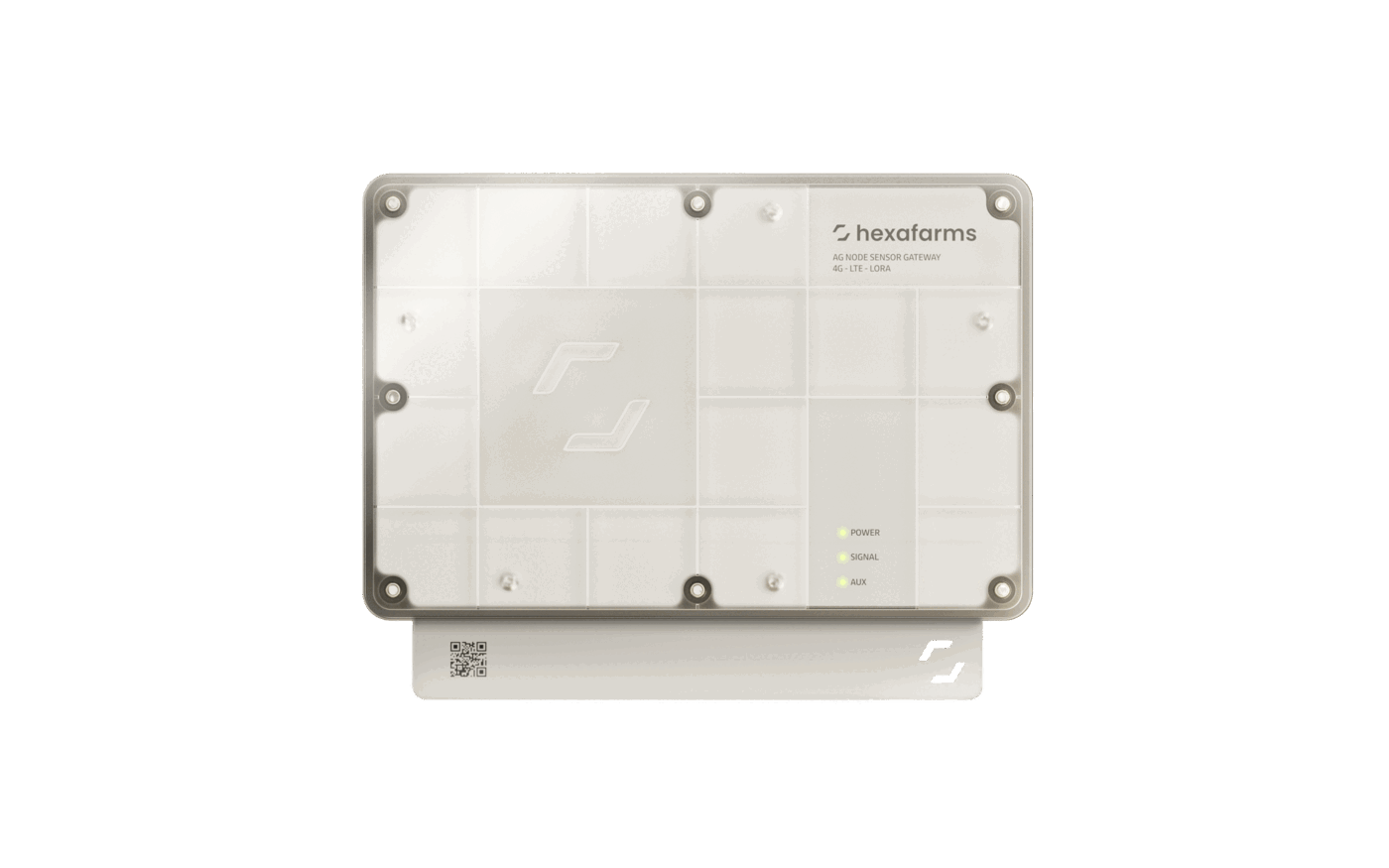






A scout that looks at every plant, every day.
10 to 15% yield loss due to pest and disease is often accepted as the cost of doing business. It doesn't have to be this way. hexafarms robots are built to cover every row, every day, allowing you to detect issues before they threaten your crop.
10 to 15% yield loss to pest and disease. Accepted as the cost of doing business. It doesn't have to be.
Available for these crops:
Your scouts are good. But they cannot be in every row every day.
Manual scouting
Your scouts' expertise is irreplaceable, but their time is finite. Thoroughly walking a single hectare takes a full day, and the gaps between rounds are exactly where outbreaks start. So far it has been impossible to detect all pests & diseases early with the naked eye, and the results of this can be disastrous.
Works well if:
- Pest pressure in your region is low and stable.
- Your operation is small enough for daily rounds.
- A 10 to 15% yield loss fits your business model.
Fixed cameras & static imaging
Better than manual scouting for specific zones, but fundamentally limited by geometry: they only see what is directly in front of them. Outbreaks start somewhere, not everywhere. If the infection begins outside the fixed viewpoint, you won't see it until the crop is already lost.
Works well if:
- You only have a few fixed, high-risk zones to monitor.
- You want a standalone tool without OS integration.
- Full-facility daily coverage is not required.
hexafarms pest & disease detection
Detection is where we start. Prevention is where we take you.
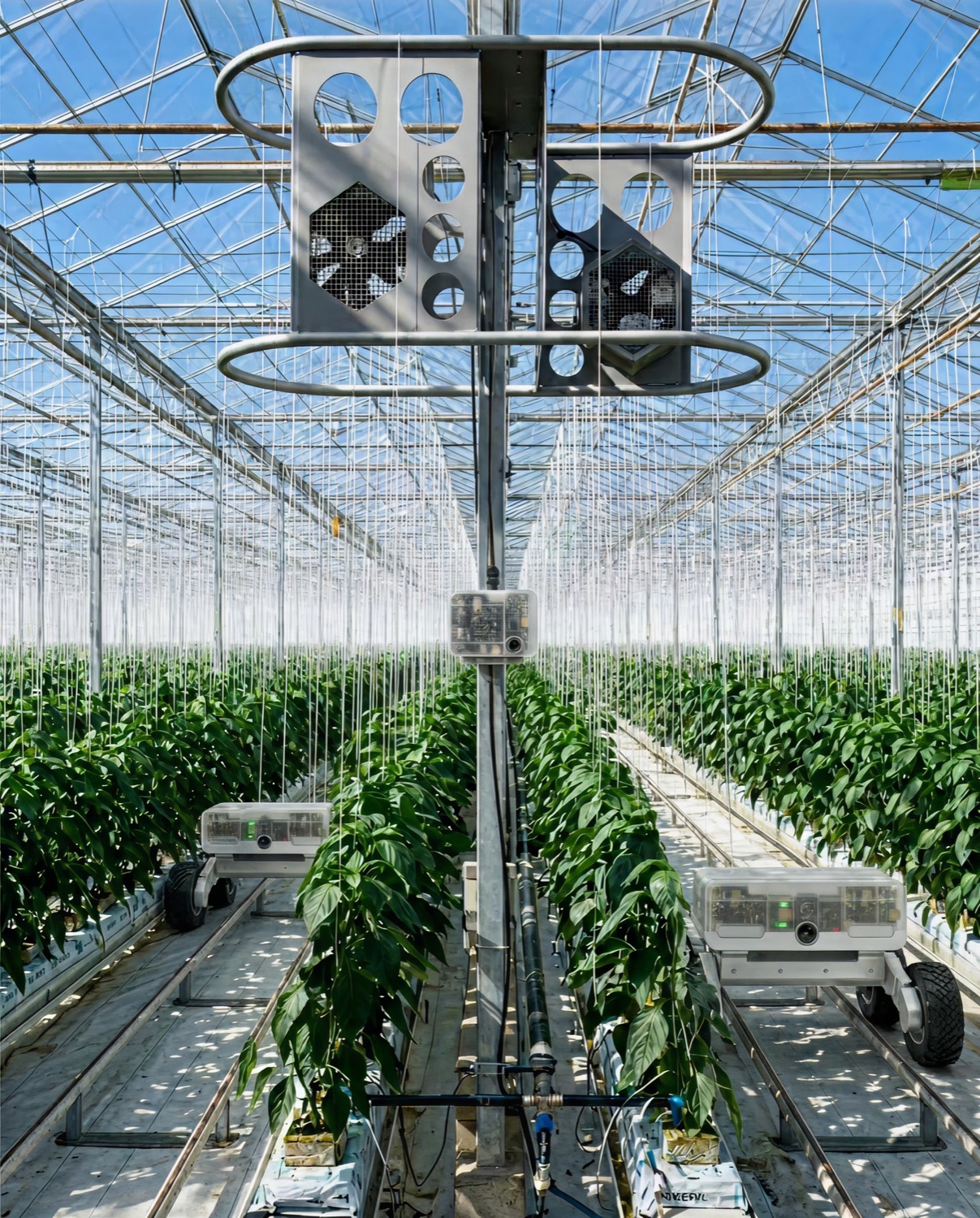
Robots cover 3 hectares daily. Every row, every day. No rails or setup modifications required. Catch issues 3 to 5 days earlier. Detection data merges with your climate- and IPM strategy, the hexafarms OS learns exactly which conditions lead to increased pressure.
Works well if:
- You demand full-facility coverage, not fixed viewpoints.
- Pest pressure is increasing or unpredictable.
- You want to evolve from simple detection to true prevention.
Built to see every row, every day. Three hectares covered every day.
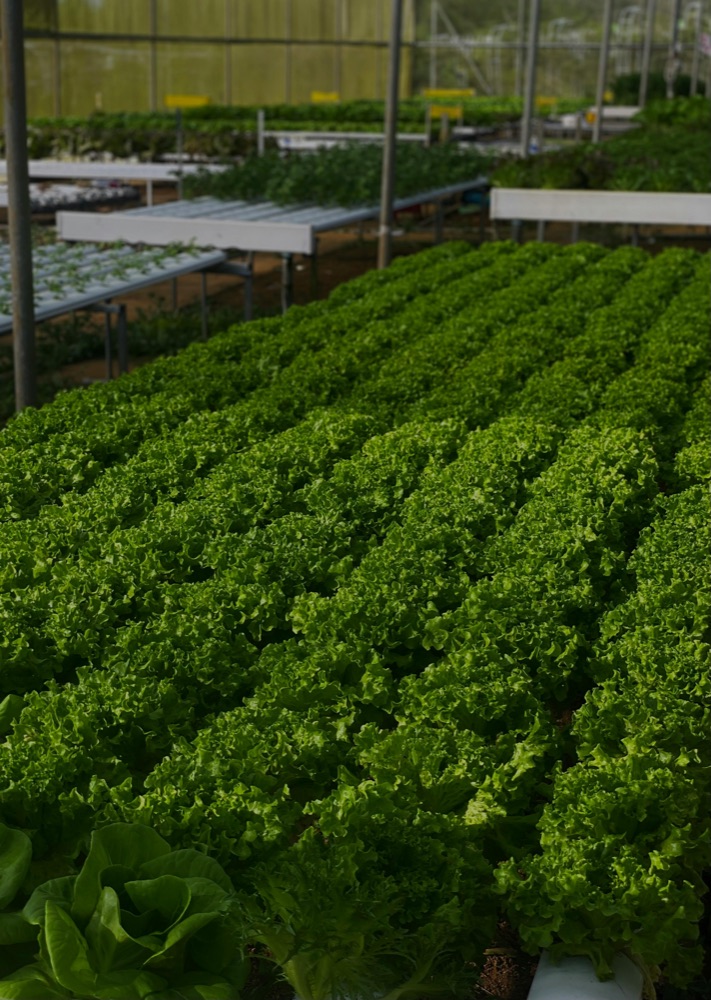
Every row. Every day.
Our rolling robots are built to cover the full facility, without fixed blind spots or expensive rail installations. Continuous scanning, at a fraction of the cost.
What you get
hexafarms covers the full picture.
Most pest and disease tools pick one problem to solve. hexafarms covers everything computer vision can see, in one system.
Pests
Crop-specific pests that directly damage yield. Tuta absoluta, leaf miner, aphids. Detected per crop, per variety, per department.
Diseases
Conditions caused by fungi or viruses. Botrytis, powdery mildew, leaf mold. Detected early, before spread becomes uncontrollable.
Insects
A global model for airborne and trap-based insect monitoring. Thrips, whitefly, and other flying pests detected via integrated insect traps. Not crop-specific; a universal layer across your full operation.
Plant stress
Abiotic stress indicators visible through computer vision. Nutrient deficiencies, heat stress, water stress, and other non-pathogenic conditions that affect yield before they become visible to the human eye.
Zero gaps. Total crop visibility.
Learn more about our robots
Built to cover every row daily.
No scouting gap between rounds.
85 to 90%
detection accuracy
On Botrytis, mildew, Tuta, leaf miner.
Up to 5 days
earlier detection
Caught before it spreads through the crop.
The step from detection to prevention.
By cross-referencing robot images with your AgNode sensing history, the hexafarms OS learns exactly which climate patterns precede infections.
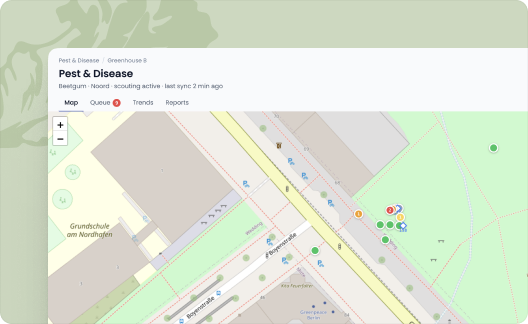
Interactive infection map
Stop searching blindly. Pinpoint exact outbreak zones across your entire facility in real-time, and direct your team only where physical intervention is actually needed.
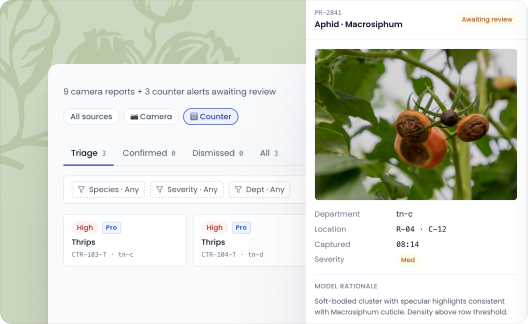
All detections in one place
Review high-resolution images flagged by the robot. The AI provides the confidence score; your experts simply validate or dismiss the threat in seconds.
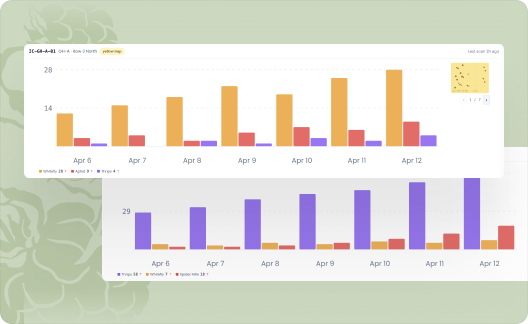
Population dynamics
Track changes in pest and disease pressure over time. Monitor daily population spikes to evaluate exactly how well your biological or chemical treatments are working.
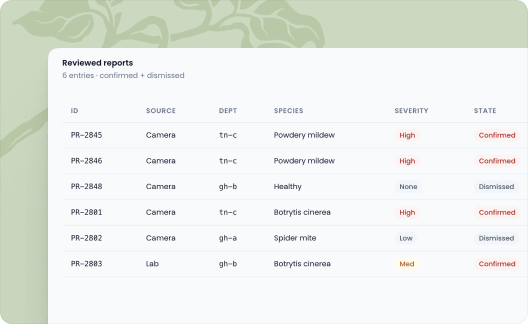
Historical audit trail
Maintain a clean, exportable log of every confirmed or dismissed alert. Keep your team accountable and simplify reporting for management and compliance.
Accurate early. Sharper as your data builds.
Want to see what this looks like for your crop?
Get in touchThe investment case
Most growers can survive one bad season, not two. Make sure you have none.
The reality of a 6-hectare tomato operation:
Seasonal yield value.
~€5,000,000
Average year loss:
10-15%
Outbreak year loss:
30-50%
How hexafarms changes your reality:
Total annual investment for 3 robots:
€30,000
In an average year, 2 hexafarms robots covering 6 hectares already pay themselves back and allow for reduced scouting labour and early intervention savings.
In the average year:
Serious impact on the bottom line, plus significantly reduced manual scouting costs.
In the outbreak year:
The investment pays itself back several times over in a single season.
Autonomous Robots
Be one of the first operations to make pests and diseases a problem of the past.
Early-mover pricing available now!
Full-facility coverage daily
No rails or modification needed
Join the first deployment.
Robots roll out this season with limited slots per quarter. Tell us about your operation and we'll show you exactly what full-facility detection looks like for your crop, at early-adopter pricing.
The doubts we hear, answered.
Detection models are not reliable enough yet.
Current accuracy runs 85 to 90% on our detection models. Where the limit sits today is detection rate, not accuracy. Every robot deployed feeds the dataset, and the dataset is what improves detection rate over the season. Early adopters don’t pay for a perfect system. They pay to shape the system around their specific operation and the pests and diseases they face. And they set the standard every grower after them will use.
For that price I can hire a specialist scout every two weeks.
A specialist visiting once a week cannot be in every row every day. Robots scan every row every day at a fraction of the daily cost. A specialist costs roughly €1,000 per day plus travel. A hexafarms robot costs roughly €40 per day, continuously, across the full facility. The comparison is not hourly rate. It is coverage hours per euro spent.
We do not have that kind of pest pressure in our region.
Some of the growers we work with said the same thing two seasons ago. Pest pressure is not static. Every year we see new pests & diseases spread to every part of the globe. The time to build a detection baseline is before the pressure arrives, not after. A system that already knows your operation after a full season is far more valuable than one you install in an emergency.
Robots in the greenhouse feel like overkill.
Fixed cameras are spotlights. A robot that covers 3 hectares per day provides full visibility. Botrytis, mildew, Tuta, these break out somewhere, not everywhere. If they are not where the camera points, you do not see them. Until the infection has spread, at which point the crop is often already lost. Robots are not a luxury. They are a necessity if we want to move from treating pests & diseases to preventing them.
What about systems like IUNU?
IUNU is built for US enterprise operations. Per-unit hardware commitment runs in the high five-figures. Our robots require no rails, no modification, and cost €15,000 per unit. Same category of capability. A fraction of the cost.
Which crops are currently supported?
Detection models are actively trained on tomato, pepper, strawberry, and raspberry. Model accuracy and detection rate vary by pathogen and crop, and improve continuously as the deployed fleet grows.
Detection is where we start. Prevention is where we take you.
Every robot deployed feeds the dataset, and the dataset is what sharpens detection across your region. Early adopters don't pay for a finished system, they get to build the system optimised for their operation.