





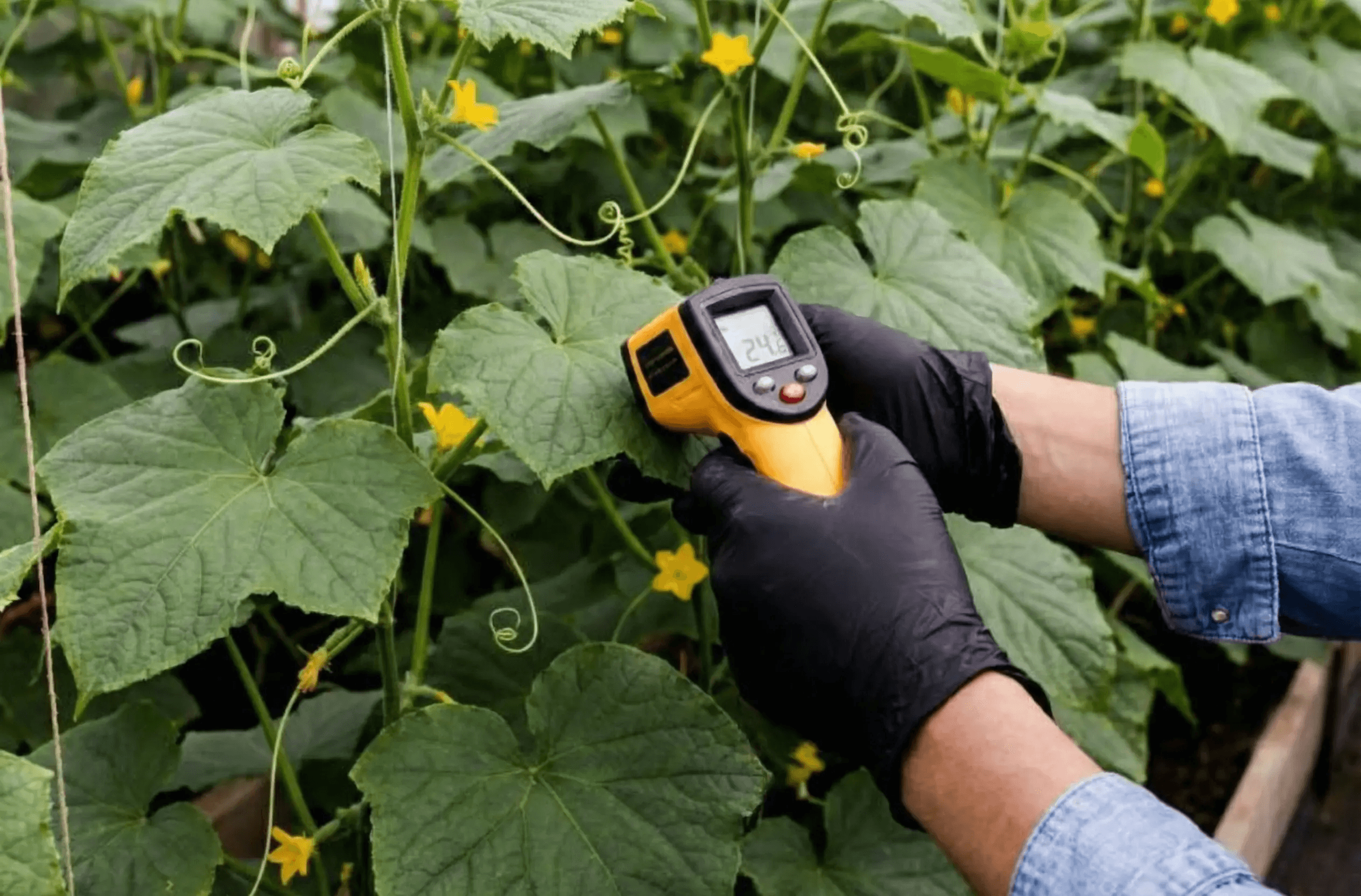
Leaf temperature is one of the earliest and most reliable distress signals a plant can send. When a plant faces drought, heat, disease, nutrient deficiency, or virtually any other stressor, its ability to cool itself through transpiration is disrupted. That disruption shows up almost instantly as changes in leaf surface temperature and it is often long before any visible symptoms appear.
High resolution thermal cameras, now often paired with deep learning algorithms trained on thousands of stressed and healthy canopies, can reliably detect leaf temperature anomalies of <1 °C. However, a thermal image is only raw data, not diagnosis. A hotspot on a single leaflet or a cool patch along the midrib could reflect drought, vascular blockage, pathogen-induced stomatal closure, or half a dozen other processes. To move from pattern recognition to mechanistic understanding (and, ultimately, to the right management decision), we need to connect those temperature signatures back to the underlying physiology.
Why leaf temperature changes under stress
Leaf temperature is governed by evaporative cooling through transpiration. A healthy, well watered leaf in full sunlight typically often stays 2–10 °C cooler than the surrounding air because the evaporation of water from mesophyll cell walls removes a tremendous amount of energy. This cooling depends on controlled by stomatal aperture. When stomata are wide open, transpiration is strong and the leaf stays cool; when they partially or fully close, cooling drops and the leaf temperature increases. This simple physiological mechanism explains most of the temperature patterns we observe in stressed plants.
Abiotic stresses, including drought, salinity, heat, and elevated vapor pressure deficit (VPD), trigger stomatal closure as a primary mechanism to mitigate transpirational water loss. This reduction in transpiration consequently impairs evaporative cooling, resulting in a rapid elevation of leaf temperature, frequently by 3-8 °C compared to optimally irrigated plants, although the canopy remains visually undegraded.
Biotic stresses, specifically those induced by pathogens and certain insect pests, typically elicit a more complex and characteristic biphasic thermoregulatory response in the host plant:
Phase 1: Early response (first hours to 1-2 days post infection)
During the early phase, numerous necrotrophic and hemibiotrophic pathogens (e.g., Botrytis, Xanthomonas, Pseudomonas species) actively interfere with guard cell signaling pathways. This interference often leads to abnormally sustained stomatal opening or the inhibition of stomatal closure at night. The resulting physiological response is an increase in transpirational flux and a corresponding transient cooling of the infected tissue, which can register 1–3 °C lower than adjacent healthy foliage. This localised cold signature serves as a sensitive diagnostic indicator during the early stages of infection.
Phase 2: Late Response (2–7 days post infection)
The late phase is characterised by the progressive expansion of necrosis and extensive damage to vascular and mesophyll tissues. As hydraulic integrity deteriorates and the leaf’s capacity to transport and transpire water declines, transpiration effectively collapses. Stomata may become physically obstructed, or the hydraulic pathway may be severely disrupted. Consequently, the affected regions exhibit pronounced thermal increases, often emerging as the hottest signatures on the entire plant.
Factors modulating the thermal response
The precise timing, magnitude, and even the direction of these thermal shifts are highly dependent on several key variables:
- Plant water status: A host plant under pre existing water deficit exhibits a diminished capacity to manifest the initial early cooling phase.
- Genotype: Cultivar specific differences in the rate of stomatal response (closing or opening) influence the thermal signature.
- Pathogen lifestyle: Biotrophic pathogens (e.g., powdery mildew) tend to maintain stomatal functionality for longer durations, which can lead to a more prolonged cooling phase.
- Environmental conditions: A high VPD tends to amplify warming signals, whereas conditions of high ambient humidity can mask these thermal changes.
Applications in precision agriculture
Understanding how leaf temperature shifts under stress is what makes thermal imaging such a powerful tool for real-time crop management. When thermal data is paired with continuous sensing and AI analysis, it becomes a practical way to guide decisions inside greenhouses, vertical farms, and research environments.
Water stress management and irrigation scheduling
In controlled environments, thermal cameras mounted on fixed positions or mobile platforms continuously track minute temperature deviations that signal early stomatal closure. Since well watered, transpiring leaves maintain a lower temperature and water stressed leaves increased temperature, the system precisely identifies when and where plants begin to experience a water deficit.
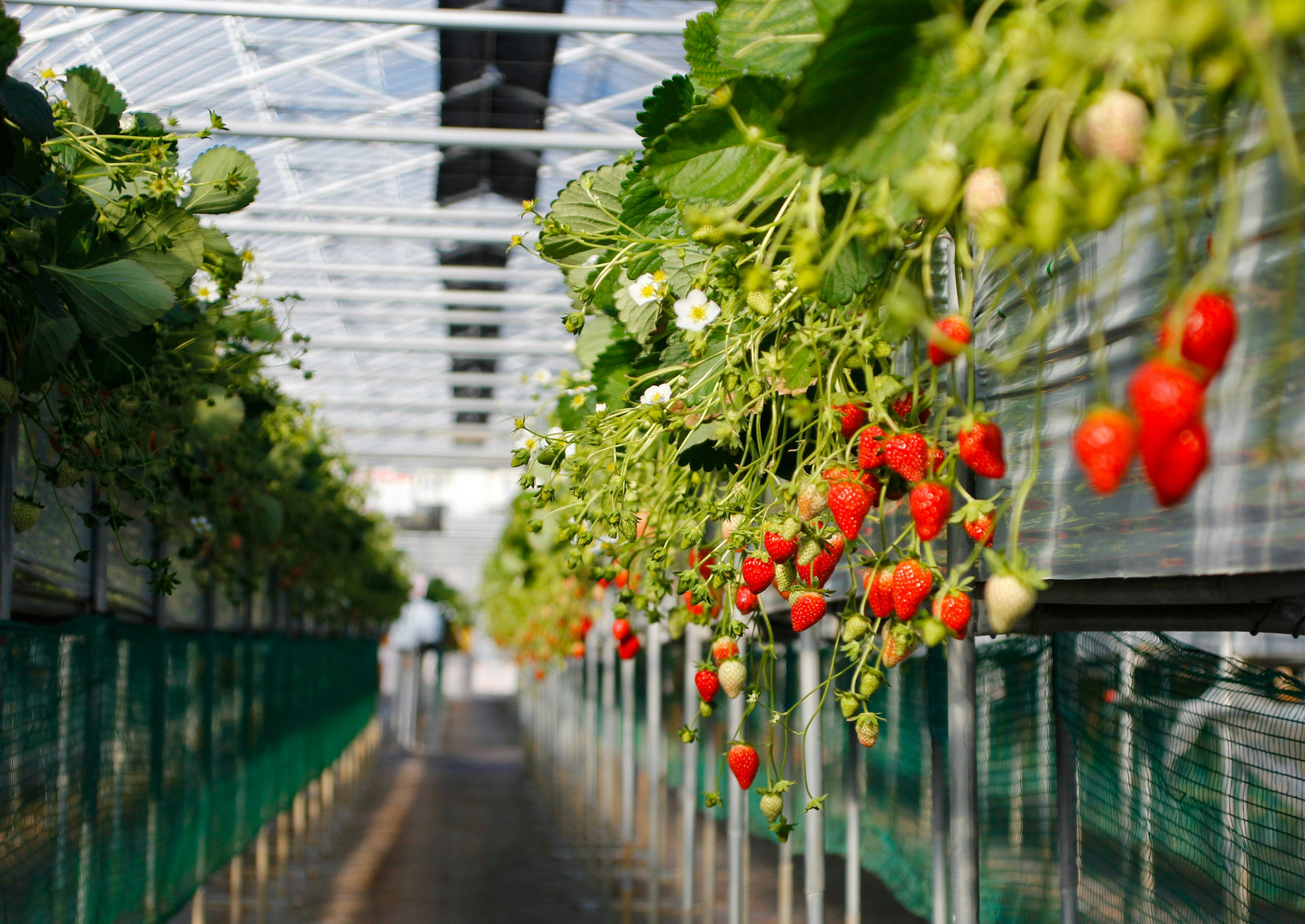
Instead of relying on substrate moisture alone, growers can schedule irrigation based on the plants’ actual physiological responses. This approach enables precision irrigation, leading to reduced water and energy waste, and ensuring more stable, high-quality plant performance. This is particularly critical in intensive crops like tomatoes, strawberries, and cucumbers, where even brief stress events can significantly impact final yield.
Early disease and pest detection
One of the most significant advantages of thermal imaging is its ability to detect the first “cold signatures” or “hot spots” that form before diseases or pests become visible. Localized cooling often manifests during the initial stages of microbial infection (pathogen-induced stomatal opening), while localized warming frequently signals severe tissue collapse, vascular blockage, or chronic loss of stomatal function.
When thermal data is integrated into AI-driven models, subtle spatial patterns become readily interpretable. The system can distinguish normal temperature variation from the distinct fingerprints of early pathogens, vascular disruptions, or developing pest colonies. This enables growers to act sooner and apply biological or chemical controls only where they are needed.
Conclusion: Unlocking Plant Health with Thermal Remote Sensing
Leaf temperature has emerged as one of the most sensitive, non-invasive indicators of plant stress, and thermal cameras now facilitate the continuous monitoring of these crucial signals. By directly linking distinct temperature patterns to underlying plant physiology, growers gain a reliable early warning system for water stress, diseases, pests, and environmental imbalances.
As thermal sensor technology becomes more precise and integrated with increasingly robust AI models, leaf temperature monitoring is transitioning rapidly from research environments into everyday horticultural practice. For operations focused on maximising greenhouse productivity and data driven cultivation, this technology represents a major competitive advantage, enabling faster decision making, ensuring healthier plants, and supporting more sustainable production models.
References
- M. Stoll, H. Schultz, B. Berkelmann-Loehnertz (2008). *Exploring the sensitivity of thermal imaging for Plasmopara viticola pathogen detection in grapevines under different water status.* Functional Plant Biology
- J. Y. Kim, Seung Ju Lee, W. K. Min, S. Cha, J. Song, and 1 more (2022). *COP1 mutation causes low leaf temperature under various abiotic stresses in Arabidopsis thaliana.* Plant Direct
- Hanna Hõrak, Luke Fountain, Jessica A. Dunn, Joanna Landymore, J. Gray (2021). *Leaf temperature responses to ABA and dead bacteria in wheat and Arabidopsis.* Plant Signalling & Behavior
- P. Pinter, M. Stanghellini, R. Reginato, S. Idso, A. D. Jenkins, and 1 more (1979). *Remote Detection of Biological Stresses in Plants with Infrared Thermometry.* Science
- M. Lindenthal, U. Steiner, H. Dehne, E. Oerke (2005). *Effect of downy mildew development on transpiration of cucumber leaves visualized by digital infrared thermography.* Phytopathology
- M. Omer, J. Locke, J. Frantz (2007). *Using Leaf Temperature as a Nondestructive Procedure to Detect Root Rot Stress in Geranium*
- R. Calderón, C. Lucena, J. L. Trapero-Casas, P. Zarco-Tejada, J. A. Navas‐Cortés (2014). *Soil Temperature Determines the Reaction of Olive Cultivars to Verticillium dahliae Pathotypes.* PLoS ONE
- Renata Fernandes Alves, F. Putti (2022). *Use of images for early identification of water stress.* Revista Brasileira de Engenharia de Biossistemas
- L. Chaerle, M. Vandeven, R. Valcke, D. Van Der Straeten (2002). *Visualization of early stress responses in plant leaves.* SPIE Defense + Commercial Sensing