



Leaf mold
Tomato leaf mold is a fungal foliar disease that primarily affects greenhouse and high-tunnel tomato crops, though it can occur in humid field conditions as well. It is caused by the fungus Fulvia fulva, which infects leaves, and occasionally stems, flowers, and fruit, leading to reduced photosynthetic capacity, defoliation, and yield loss. The disease thrives in enclosed, poorly ventilated environments where humidity remains high for extended periods.
Affected crops:
Favorable:
23–26 °C · > 85% RH
Season:
Late spring through fall/year round in heated greenhouses with poor ventilation
Identification & symptoms
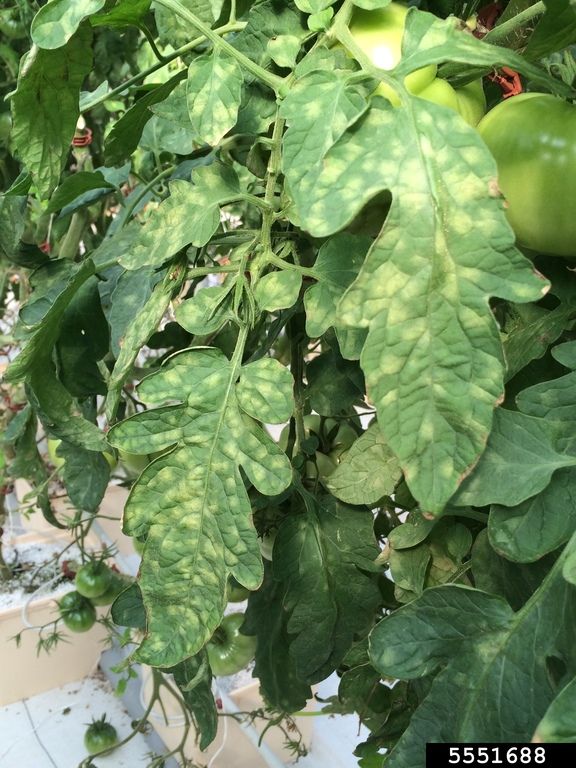
- Pale green to yellow spots on the upper leaf surface, often without defined margins
- Olive-green to grayish-brown velvety mold on the lower leaf surface, corresponding to upper-surface spots
- Leaves curl, wither, and turn brown as infection progresses
- Severe infections cause leaves to dry out and drop prematurely, starting with older/lower leaves
- Occasionally affects stems, petioles, flowers, and green fruit, causing dark, leathery lesions (fruit infection is less common)
Life cycle
- Survival: The pathogen can survive on infected plant debris, as conidia, and in some reports as sclerotia; contaminated seed can also introduce the pathogen.
- Primary inoculum: Conidia are produced abundantly on infected tissue and serve as the principal source of new infections.
- Dispersal: Conidia are spread by air currents, water splash, plant handling, and contaminated tools or plant material.
- Germination: Conidia germinate on the leaf surface under high humidity or free moisture.
- Penetration: Germ tubes grow across the leaf surface and enter primarily through open stomata, rather than through wounds.
- Colonisation: The fungus develops mainly in the intercellular/apoplastic spaces of the leaf within 10–14 days.
- Sporulation: New conidiophores emerge through stomata on the lower leaf surface and produce large numbers of conidia.
- Secondary cycles: These conidia initiate repeated infections during favourable conditions, allowing rapid disease development within greenhouse crops
Favorable conditions
- High relative humidity, particularly above 85%.
- Free moisture or prolonged leaf wetness strongly favours germination and infection.
- Poor ventilation and restricted air movement increase humidity within the canopy.
- Dense greenhouse canopies create a favourable humid microclimate.
- The disease is particularly important in greenhouses and high tunnels, where humidity can remain elevated for extended periods.
Diagnosis
- Inspect the lower leaf surface for characteristic olive-green to brown, velvety sporulation.
- Look for corresponding yellow to pale-green blotches on the upper surface of affected leaves.
- Check whether symptoms begin on older, lower leaves and progress upward through the canopy.
- Assess the crop environment for high humidity, condensation, and prolonged leaf wetness.
- Distinguish from early blight and Septoria leaf spot by the distinctive velvety sporulation and lesion pattern.
- Confirm uncertain cases by microscopic examination of conidiophores and conidia or molecular testing.
Prevention & treatment
Preventive strategies focus on reducing humidity and leaf wetness through proper ventilation, spacing, and airflow, while introducing beneficial microorganisms that can outcompete or inhibit fungal establishment on leaf surfaces.
Pros:
- Lower environmental impact than many conventional fungicide programmes.
- Low resistance-selection risk compared with single-site fungicides.
- Can reduce reliance on synthetic fungicides.
- Some bacterial antagonists can also promote plant growth and induce plant defence responses.
Cons:
- Field and greenhouse performance can be variable.
- Generally less predictable than effective conventional fungicides under severe disease pressure.
- Performance depends strongly on environmental conditions, formulation, application timing, and establishment of the antagonist.
- Many candidate biological agents have limited commercial registration or crop-specific evidence.
Fungicides: Botrytis-style broad-spectrum fungicide lists should not be transferred directly to leaf mold. Products specifically documented for tomato leaf mold include fungicides such as azoxystrobin (FRAC 11), azoxystrobin + difenoconazole (FRAC 11 + 3), and chlorothalonil (FRAC M05), depending on local registration. Because P. fulva colonizes tissue through stomata and develops inside the leaf, translaminar or systemic/local-systemic fungicides can provide better control than purely contact products, although thorough coverage remains important. Application: Fungicides are generally most effective preventively or very early in disease development, before extensive sporulation and canopy infection. Resistance management: Rotate or alternate fungicides with different FRAC groups, avoid repeated use of the same single-site mode of action, and follow crop-specific label restrictions.
Pros:
- Rapid and effective disease suppression when the pathogen population is sensitive.
- Can protect valuable upper-canopy foliage when applied appropriately.
- Multiple fungicide groups provide options for resistance-management programmes.
Cons:
- Fungicide resistance has been documented in P. fulva, including resistance to azoxystrobin.
- Repeated use of the same mode of action can increase selection pressure for resistance.
- Application costs can be significant.
- Residue, environmental, and worker-safety considerations apply.
- Product choice, application frequency, and harvest interval depend on crop-specific registration and local regulations.
How we monitor it
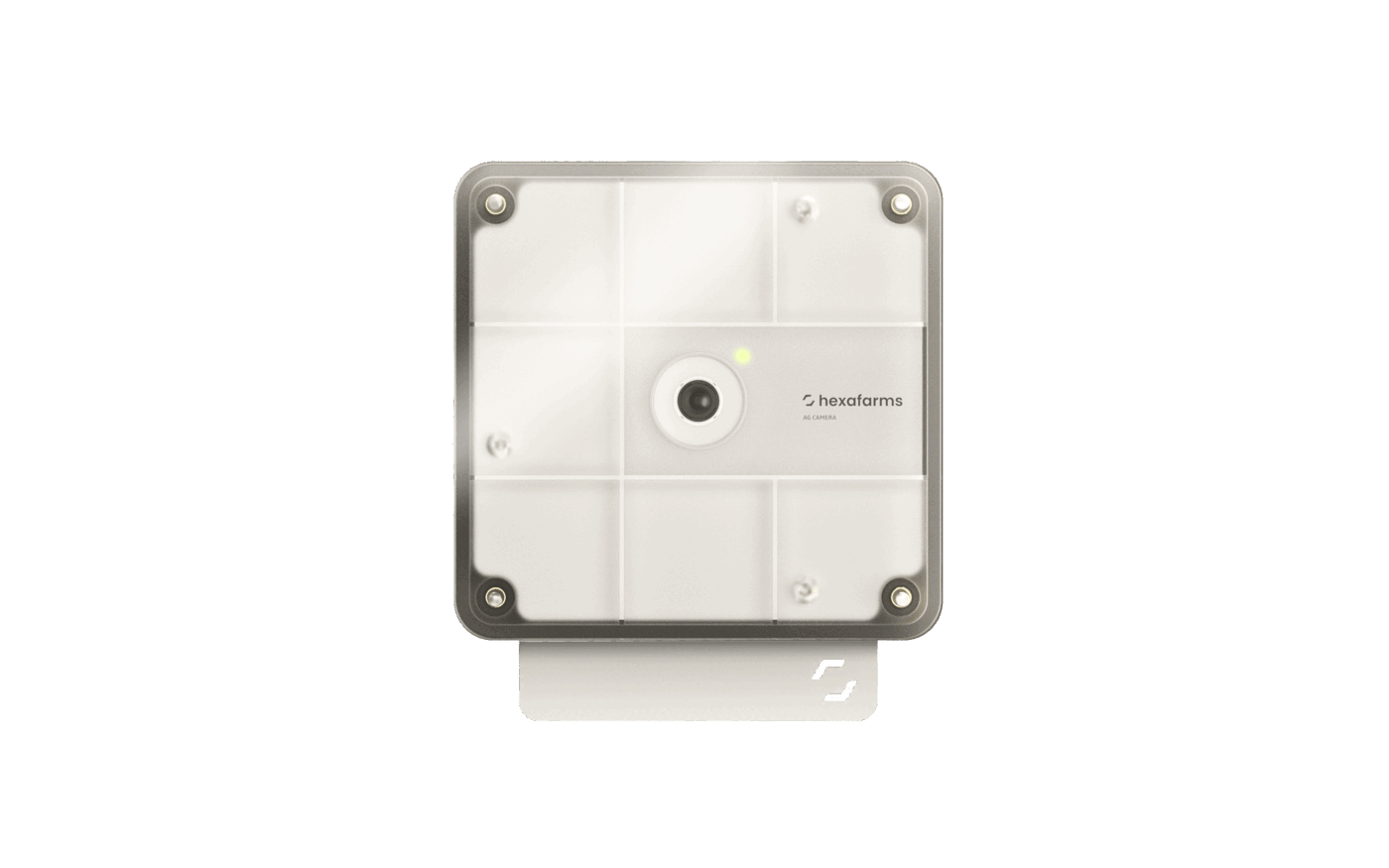
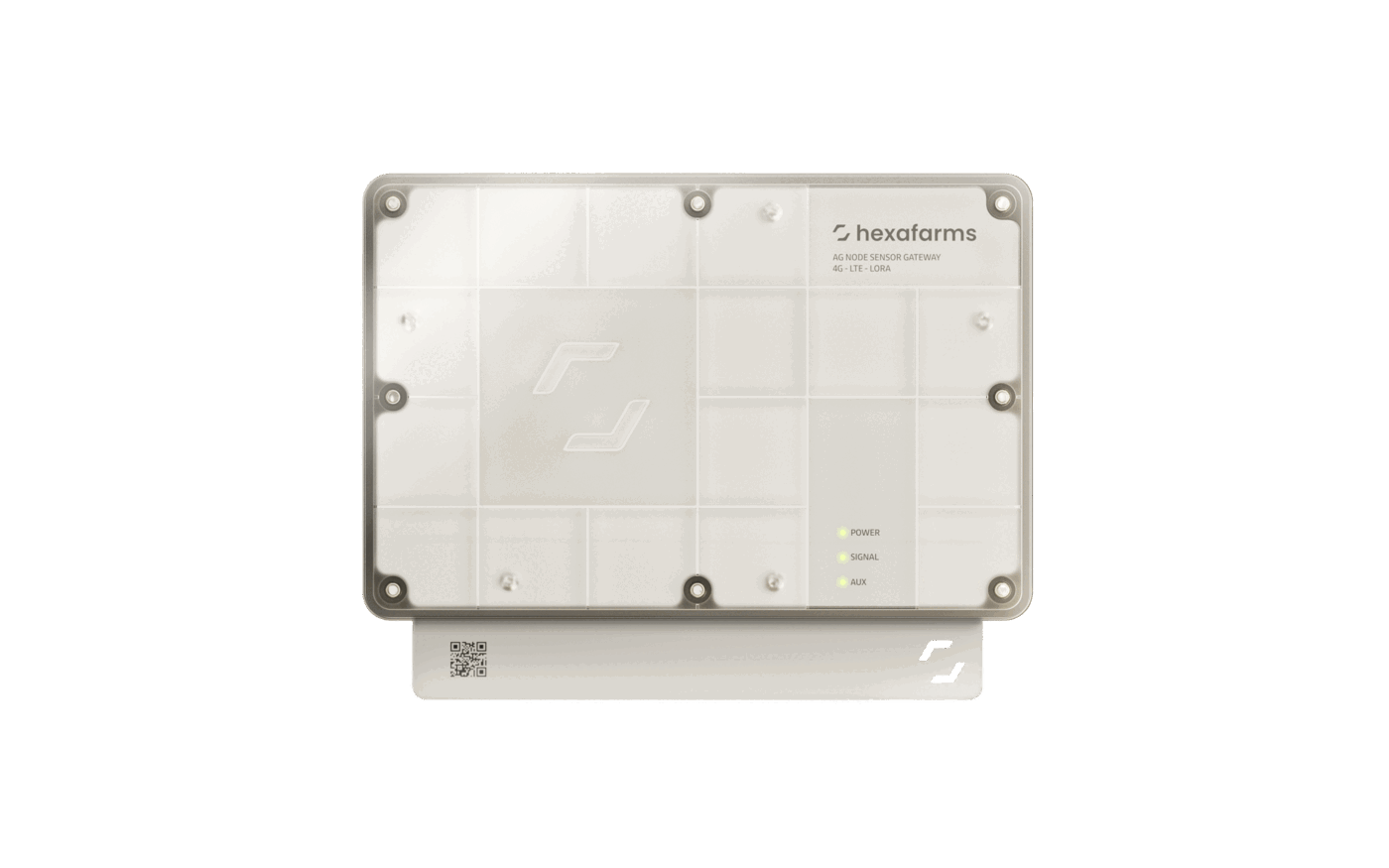
Leaf-mold pressure is primarily driven by high humidity and prolonged leaf wetness. Monitoring RH, temperature, dew-point risk, and leaf wetness can identify infection windows early, allowing growers to ventilate, heat, or dehumidify before conditions favour spore germination and infection.