Option 01
Manual scouting
One or two experienced scouts walking the crop on a fixed rotation. The expertise is irreplaceable, a skilled scout who knows the variety and the operation sees things no camera catches today. The constraint is also irreplaceable: a scout walking one hectare thoroughly takes a full day. The gaps between rounds are where outbreaks start. 10 to 15% annual yield loss to pest and disease is accepted as normal in most operations. It does not have to be.
Works well if
-
Pest pressure in your region is low and stable
-
Operation is small enough that weekly rounds cover it adequately
-
Accepted loss of 10 to 15% is within your business model
Option 02
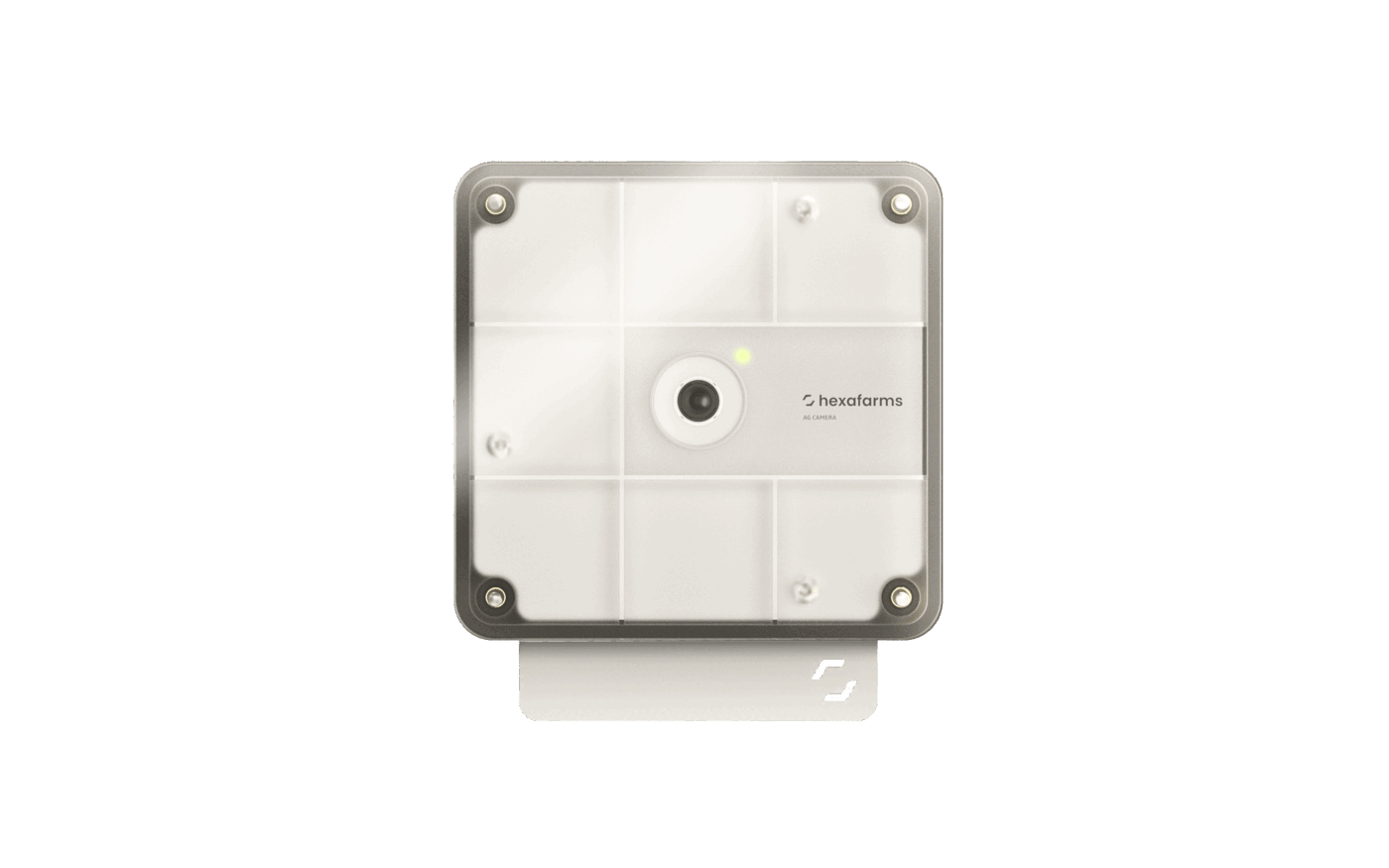
Fixed cameras and static imaging systems
Camera-based systems mounted at fixed points in the greenhouse. Better than purely manual scouting for monitored zones. The fundamental constraint is geometric: a fixed camera covers what is in front of it. Botrytis, Tuta, and Thrips break out somewhere, not everywhere. If they are not where the camera points, you do not see them, until the infection is visible to the naked eye, at which point the batch is often already lost.
Works well if
-
You have a small number of fixed high-risk zones to monitor
-
You want a standalone detection tool without platform integration
-
Full-facility rolling coverage is not a requirement
Option 03
hexafarms Pest & Disease Detection
Part of the hexafarms OS, connects to Sensing history
Rolling robots at 1 metre per second. Every row, every day. 1,920 images per robot per day. No rails, no greenhouse modification. Botrytis, powdery mildew, Tuta absoluta, leaf miner, thrips, caught 3 to 5 days earlier than manual scouting. And because detection data flows into the same platform as your sensing history, the system learns which climate patterns precede which infections. Detection is where we start. Prevention is where the OS takes you.
Works well if
-
You want full-facility coverage, not fixed viewpoints
-
Pest pressure is increasing or unpredictable in your region
-
You want to move from detection toward prevention over time